2026 lambs are sold out. Orders for 2027 lambs open in August. Get on the list
White Dorper Sheep · Columbia Gorge, Washington

Grass-raised lamb from top Texas Dorper genetics

We raise White Dorper sheep on grass and finish our lambs on locally grown alfalfa. Clean, mild, tender lamb from our family to yours.

70White Dorper ewes
4Herd sires
2023Established
Our Farm

Grass first. Alfalfa to finish.

No shortcuts. Our sheep graze pasture from spring through fall, and every bale of finishing alfalfa comes from farmers near us.

We've also teamed up with neighbors to fence and graze fields that were sitting unused. Those fields have become new paddocks for the flock, and the work has turned neighbors into friends.

  1. Born on the farm

    Lambs are raised alongside their mothers in our own flock.

  2. Raised on grass

    Our flock grazes pasture through the growing season. In winter, while the pastures rest, they're fed grass hay, so grass is the whole diet while they grow.

  3. Finished on local alfalfa

    Lambs are finished on alfalfa we buy from local growers, which keeps our money in the community and our feed traceable.

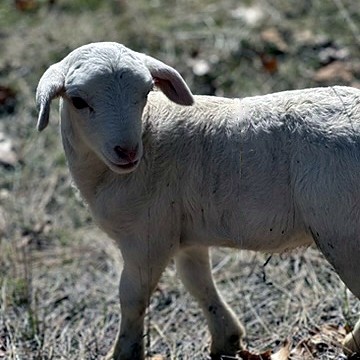
A young White Dorper lamb standing in sunlit pasture
A spring lamb on pasture
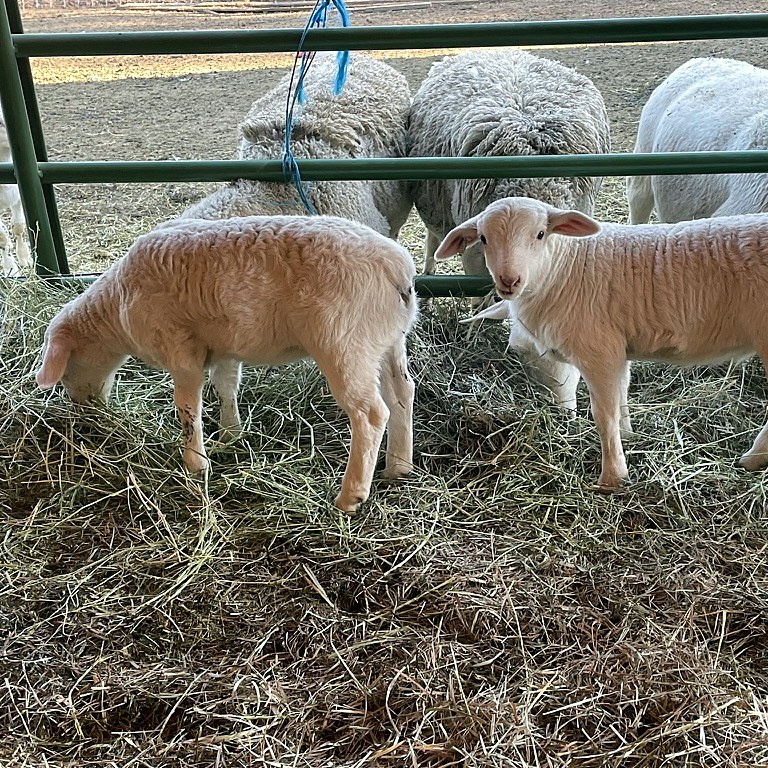
Two White Dorper lambs standing in hay with the ewes behind them
This year's lambs
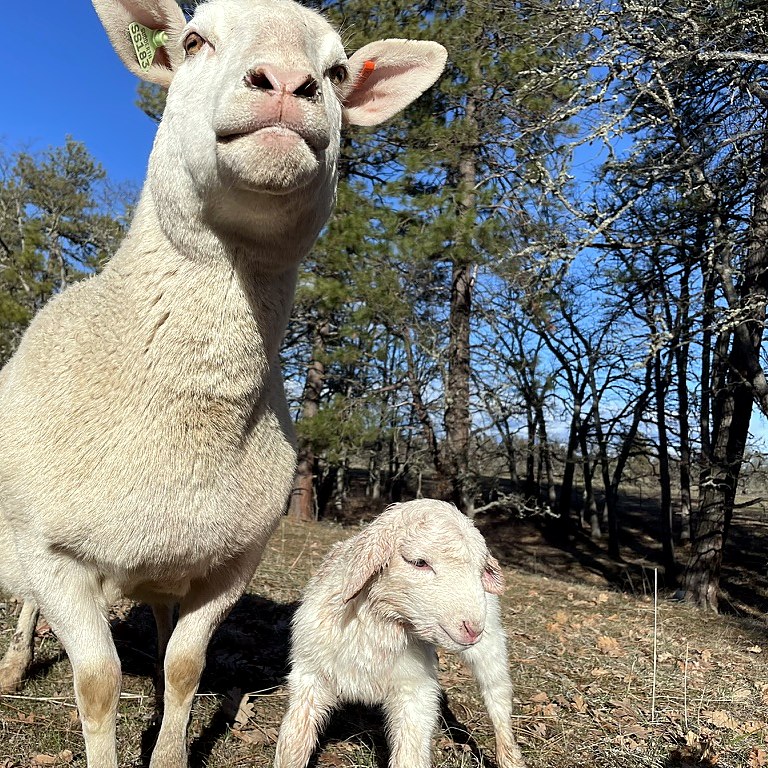
A White Dorper ewe standing over her newborn lamb under oak and pine trees
A ewe and her newborn lamb
Our Flock

The best of the best, out of Texas

Our flock is built on Yucca Lily White Dorpers, bred by Mike Sudderth in Texas. When Mike retired, Abraham's sister Emily, of Two Rock Ranch in New York, secured the last of his ewes and sent them west to us.

We started with genetics we could stand behind: White Dorpers bred for strong frames, good muscling, and easy-care mothering. Today our flock is 70 ewes and 4 rams.

Dorpers are hair sheep. They shed their winter coat on their own, need little or no shearing, and thrive on pasture. That hardiness shows up in the quality of the lamb.

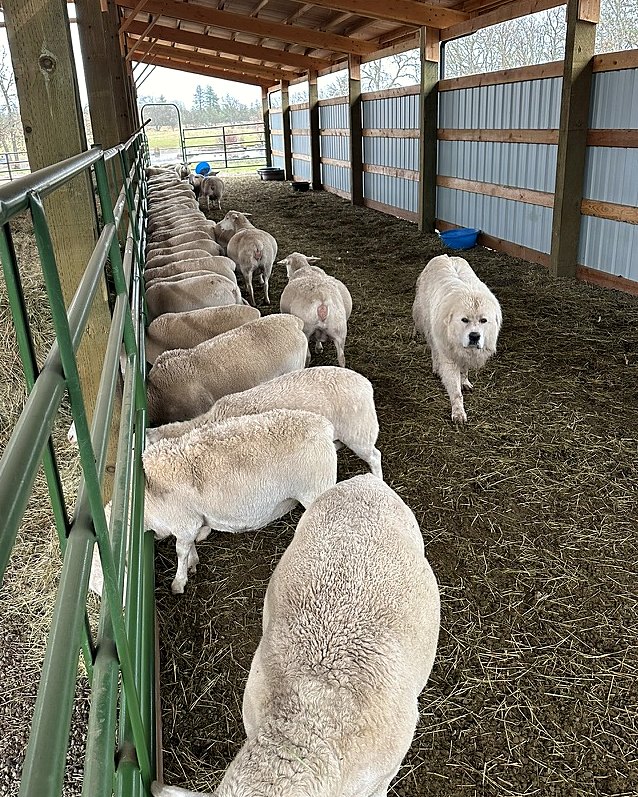
Ewes eating at a long feed bunk in an open barn while a white guardian dog walks beside them
One of our Great Pyrenees guardians keeps watch at feeding time
The Breed

From South Africa's Karoo to the Columbia Gorge

The Dorper was built for dry, open, demanding country. So is ours.

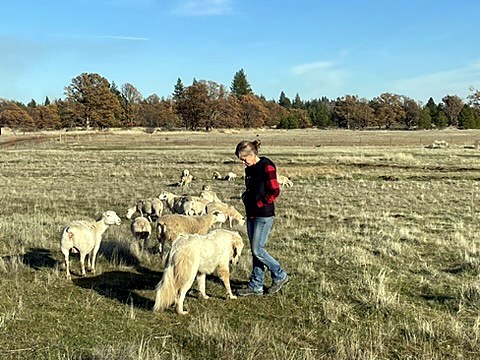
Leading the flock and the guardian dog across open pasture with oak and pine trees behind
Moving the flock to fresh pasture
1930s · South Africa

Bred for hard country

In the 1930s, South Africa's Department of Agriculture set out to build a meat sheep for the Karoo, a dry, rugged region where few breeds did well. Crossing Dorset Horn rams with Blackhead Persian ewes produced the Dorper, a name made from the first syllables of its two parents. The White Dorper came out of the same program, with some Van Rooy blood. Breeders founded the Dorper society in 1950.

How they graze

Made for rough forage

Dorpers aren't picky. They graze grasses and browse shrubs and weeds that other sheep pass up, and they turn that rough forage into well-muscled lambs. A thick skin and a shedding coat of hair and wool protect them from sun, heat, and cold. The ewes are fertile, attentive mothers.

Eastern Columbia Gorge

Why they thrive here

Our farm sits on the dry side of the Cascades. Summers are hot and dry, winters are cold, and the open grasslands look a lot like the country the breed was developed for. The traits that let Dorpers thrive in the Karoo let them thrive here on grass alone.

Flock Health

Bred for resilience, season after season

Dorpers were developed to thrive with little help, and we manage our flock to keep it that way. We watch every animal closely and breed only from the ones that thrive on our ground. Over time, that careful selection has made our flock noticeably hardier.

  • Only the best mothers stay: a ewe that has trouble lambing or doesn't mother her lambs well leaves the flock. Our replacements come from the ewes that do both on their own.
  • Targeted parasite care: when a sheep needs help with parasites, we treat that animal individually with copper oxide wire particles rather than deworming the whole flock.
  • A healthy record: to date, we've had no foot rot or pneumonia in our flock.
  • Care when it's needed: we keep intervention to a minimum, but any animal that needs care gets it.
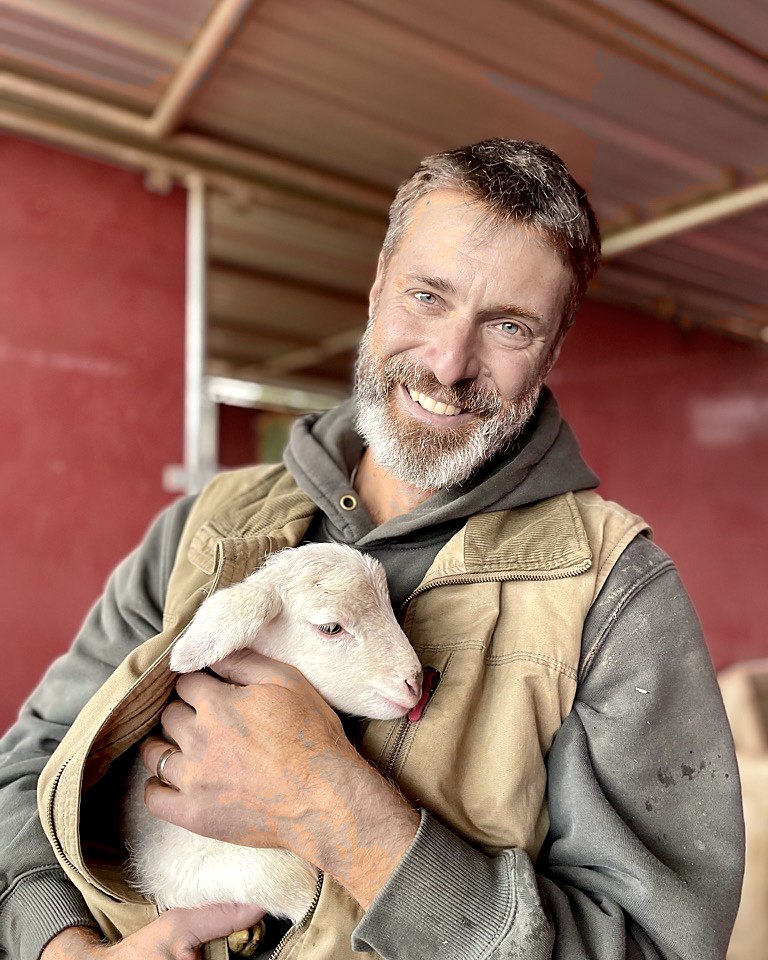
Smiling farmer in a work vest holding a young White Dorper lamb in the barn
Lambing season in the barn
Our Family

A family farm, all hands in

Abraham, Holly, and our five sons

Abraham and Holly run the farm together, and all five of our boys pitch in. Everyone works the flock, from lambing season to moving sheep across pasture.

We sell directly to families, chefs, and markets because we want you to know exactly where your lamb comes from and how it was raised.

Coast to Coast

One family, two flocks, two coasts

Good sheep run in the family. Abraham's sister Emily raises White Dorpers at Two Rock Ranch in the Helderberg mountains of upstate New York, and her farm is one of the standout Dorper operations in the Northeast. Two Rock runs a flock of more than 300 full-blood and purebred White Dorpers, has earned Grand Champion and Premier Breeder honors at the Eastern States Exposition, and was the first sheep farm in New York to earn New York State Grown & Certified status.

It was Emily who secured the last of Mike Sudderth's Yucca Lily ewes and sent them west to start our flock. We're proud to share her love of the breed from one coast to the other.

Simcoe Foothills FarmColumbia Gorge, WA
Two Rock RanchBerne, NY
Lamb for Your Table

Order lamb from our flock

Grass-raised, alfalfa-finished, and cut to your order, from our pasture straight to your freezer. Lambs are ready each November, and we raise only a limited number, so get on the list early.

Sold out for 2026 · Orders open August 2027

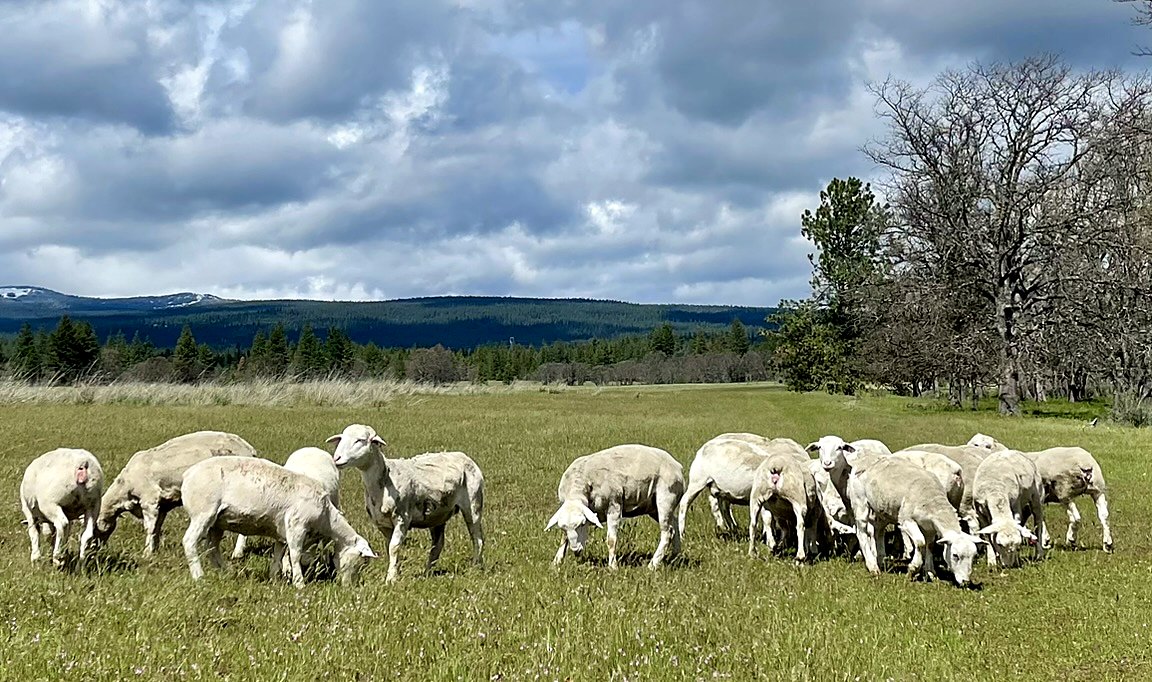
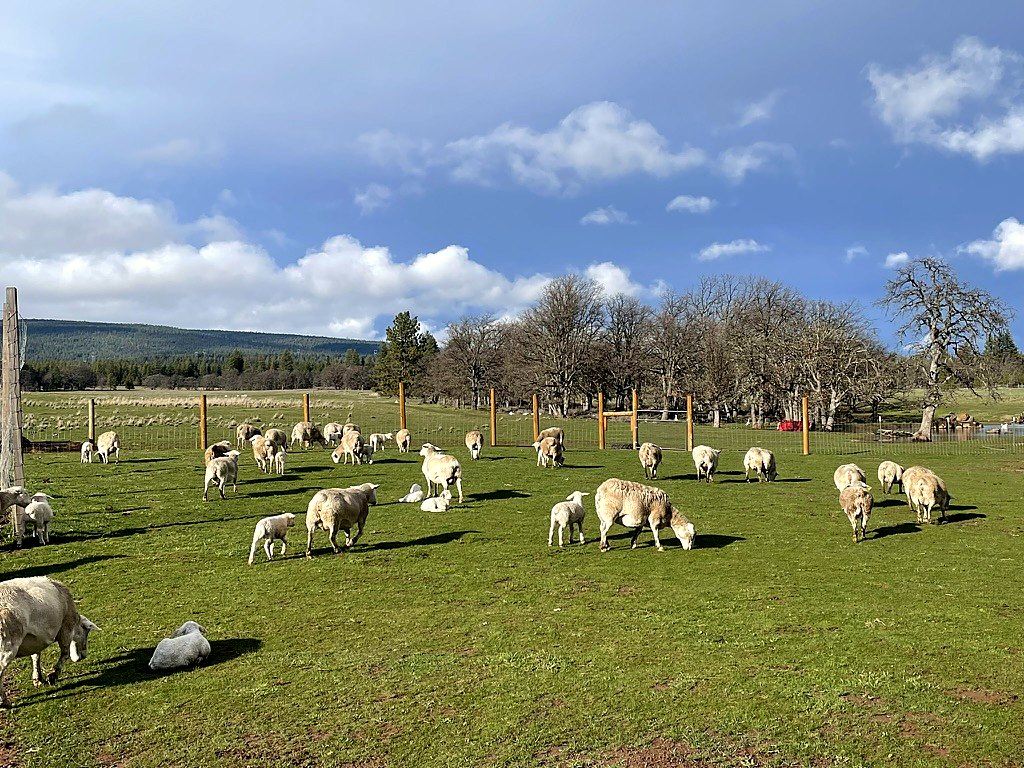
Ewes and young lambs grazing a green pasture under a blue sky

Whole Lamb

$10/lb hanging weight

About 50 lb hanging weight, roughly $500 for the lamb. Yields about 35 lb of lamb cut and wrapped to your order.

Half Lamb

$11/lb hanging weight

About 25 lb hanging weight, roughly $275 for the lamb. Yields about 17 lb of lamb. A good fit for a smaller freezer: chops, roasts, and ground lamb.

Individual Cuts

Inquire

Chops, leg, shoulder, and ground lamb as available. Email for current cuts and prices.

First time buying a lamb?

Expand your palate. It's easier than you think.

  • A season of great dinners: a French-trimmed rack for a special night, loin chops on the grill, a roast leg for a family Sunday, shanks to braise when the weather turns, and ground lamb for easy weeknights.
  • Every prized cut, not just one: buying the whole lamb means the rack and loin come home with you, along with everything else, cut the way you like it.
  • Fits right in your freezer: about 1½ cubic feet for a whole lamb, roughly a large cooler or one shelf of a chest freezer. A half takes about half that.
  • We make it simple: keep our standard picks on the order form, or tell us how you like to cook and we'll build your cut sheet with you.
  • You'll know your farmer: one family, one flock, and lamb you can trace right back to our pasture.

New to cooking lamb? Start with our English and Irish classics.

All of our lamb is cut and wrapped at a USDA-inspected facility. Prices are for the lamb; the processing fee is paid directly to the processor and runs about $250 for a whole lamb (about $125 for a half). Pickup is at the farm unless otherwise arranged, and delivery to Portland and Seattle is available on request for orders over $1,000 (a delivery fee applies). Posted prices are subject to change; your price is confirmed when you place your deposit.

Give a Lamb

A gift that feeds a family all winter. A whole or half lamb makes a memorable gift for the cook in your life. Just check “This is a gift” on the order form and tell us who it's for, and we'll coordinate the cut sheet and pickup with them.

Common Questions
What is hanging weight?

It's the weight of the carcass after processing, before it's cut and wrapped. A whole lamb hangs at about 50 lb and comes home as roughly 35 lb of cuts. The difference is bone and trim.

How much freezer space do I need?

About 1½ cubic feet for a whole lamb, roughly one shelf of a chest freezer. A half takes about half that.

How long will it keep?

For the best quality, enjoy chops and roasts within 6 to 12 months and ground lamb within 3 to 4 months. Kept frozen, it stays safe indefinitely.

Will it taste gamey?

Dorper lamb is known for its mild, clean flavor. Many people who think they don't like lamb change their minds.

Where do I pick up?

At the farm, unless we've arranged otherwise. We'll email you directions and a pickup time when your lamb is ready in November.

Do you ship?

We don't ship, but we deliver to Portland and Seattle on request for orders over $1,000. A delivery fee applies.

How do I pay?

We accept cash, check, and credit or debit cards.

Can I visit the farm?

We welcome visits by appointment. Just email us. To protect our flock, we ask visitors to follow our biosecurity guidelines.

From Our Kitchen

Old-world classics, made with our lamb

Lamb has been at the heart of the English and Irish table for centuries. These four classics each use cuts from your order, so nothing in the freezer goes to waste.

Ireland

Irish Stew

Uses neck fillets or shoulder · Serves 6 · About 2½ hours

Ireland's national dish, and proof that great lamb needs very little help: just potatoes, onions, and time.

See the recipe

Ingredients

  • 2½ lb lamb neck fillets or boned shoulder, cut into 1½-inch pieces
  • 2 lb russet potatoes, peeled: half sliced thick, half cut into large chunks
  • 3 onions, sliced
  • 3 carrots, cut into chunks
  • 2 cups lamb or chicken stock, or water
  • A few sprigs of fresh thyme
  • Salt, black pepper, and chopped parsley to finish

Method

  1. Heat the oven to 325°F.
  2. In a heavy lidded pot, layer the sliced potatoes, then the seasoned lamb, onions, carrots, and thyme. Repeat, and finish with the potato chunks on top.
  3. Pour in the stock until the meat is just covered.
  4. Cover and cook for 2 to 2½ hours, until the lamb is spoon-tender. The sliced potatoes melt down and thicken the broth.
  5. Rest for 10 minutes, scatter with parsley, and serve in deep bowls with soda bread and butter.
England

Lancashire Hotpot

Uses middle neck chops or shoulder · Serves 6 · About 2½ hours

A northern English favorite: tender lamb in a rich gravy under a roof of golden, crisp-edged potatoes.

See the recipe

Ingredients

  • 2½ lb middle neck chops, or boned shoulder in large chunks
  • 2 tbsp butter and 1 tbsp oil, plus 2 tbsp melted butter for the top
  • 3 onions, sliced
  • 2 tbsp flour
  • 2 cups lamb or chicken stock
  • 2 tsp Worcestershire sauce
  • 2 bay leaves and a few sprigs of thyme
  • 2 lb potatoes, peeled and thinly sliced
  • Salt and black pepper

Method

  1. Heat the oven to 325°F. Season the lamb and brown it in batches in the butter and oil, then set aside.
  2. Soften the onions in the same pan for about 10 minutes. Stir in the flour, then the stock, Worcestershire, and herbs. Return the lamb.
  3. Spoon everything into a deep baking dish. Overlap the potato slices across the top like roof tiles, brush with melted butter, and season.
  4. Cover and bake for 1½ hours. Uncover, raise the oven to 400°F, and bake 30 minutes more until the potatoes are golden and crisp.
  5. Serve with pickled red cabbage, the Lancashire way.
England

Sunday Roast Leg with Mint Sauce

Uses a whole leg on the bone · Serves 8 · About 2 hours

The centerpiece of the English Sunday table, studded with garlic and rosemary and served with a sharp, fresh mint sauce.

See the recipe

Ingredients

  • 1 bone-in leg of lamb, 5 to 6 lb
  • 4 garlic cloves, cut into slivers
  • 3 sprigs of rosemary, broken into small tufts
  • 2 tbsp olive oil, salt, and black pepper

Mint sauce

  • 1 packed cup fresh mint leaves
  • 1 tbsp sugar
  • 3 tbsp boiling water
  • 4 tbsp malt or white wine vinegar

Method

  1. Take the lamb out of the fridge an hour before cooking. Heat the oven to 425°F.
  2. Cut small slits all over the leg and push in the garlic and rosemary. Rub with oil and season well.
  3. Roast for 20 minutes, then lower the oven to 350°F and roast about 15 to 20 minutes per pound, until the thickest part reaches 145°F (USDA's recommended minimum) for a rosy medium.
  4. Rest under loose foil for 20 minutes before carving.
  5. For the sauce, chop the mint finely with the sugar, stir in the boiling water to dissolve, then add the vinegar. Let it stand 30 minutes.
  6. Serve with roast potatoes, seasonal greens, and gravy from the pan juices.
Ireland & Britain

Shepherd's Pie

Uses lamb mince (ground lamb) · Serves 6 · About 1¼ hours

True shepherd's pie is always lamb. A savory filling under fluffy mash, baked until the peaks turn golden.

See the recipe

Filling

  • 2 lb lamb mince (ground lamb)
  • 1 onion, 2 carrots, and 1 celery stalk, finely diced
  • 2 tbsp tomato paste and 1 tbsp flour
  • 1 cup lamb or beef stock
  • 1 tbsp Worcestershire sauce and a few sprigs of thyme
  • 1 cup frozen peas, salt, and black pepper

Topping

  • 2½ lb russet potatoes, peeled and quartered
  • 4 tbsp butter, ½ cup warm milk, and 1 egg yolk
  • ½ cup grated sharp Irish cheddar (optional)

Method

  1. Boil the potatoes until tender, drain, and mash with the butter, milk, and egg yolk. Season.
  2. Brown the lamb in a large pan and pour off most of the fat. Add the vegetables and cook 8 minutes until soft.
  3. Stir in the tomato paste and flour for a minute, then the stock, Worcestershire, and thyme. Simmer 15 minutes until thick, then stir in the peas.
  4. Heat the oven to 400°F. Spoon the filling into a baking dish, spread the mash on top, rough it up with a fork, and add the cheese if using.
  5. Bake 25 to 30 minutes until bubbling and golden.

Coming soon from our own table: Holly's slow-cooked balsamic lamb chops with blue cheese.

For Chefs & Specialty Markets

Lamb for Portland and Seattle kitchens

We supply restaurants and specialty butchers who want lamb with a story they can put on the menu.

Dorper lamb is known for a mild, clean flavor and generous muscling. Ours is raised on grass in the eastern Columbia Gorge of Washington and finished on alfalfa from neighboring growers, from a flock built on Yucca Lily White Dorper genetics out of Texas.

Every lamb is processed at a USDA-inspected facility. For wholesale pricing and availability, email Abraham.

Breeding Stock · Fall 2027

Start your own flock with our genetics

Next fall we're offering a registered White Dorper starter flock: 3 ewes and 1 ram.

They carry Mike Sudderth's Yucca Lily bloodlines, the same stock behind our lamb. A matched starter group gives you a ready-made foundation without hunting for animals from several breeders.

Every animal leaves our farm with official scrapie ID and a veterinary health check, so your flock starts on solid ground.

Our flock is managed with minimal intervention and is not vaccinated. We're glad to talk through our health practices so you can plan for your own operation.

Only one starter flock is planned, so reach out early to get on the list. Visits to see the flock are by appointment; please see our visitor guidelines.

$5,0003 registered ewes and 1 registered ram

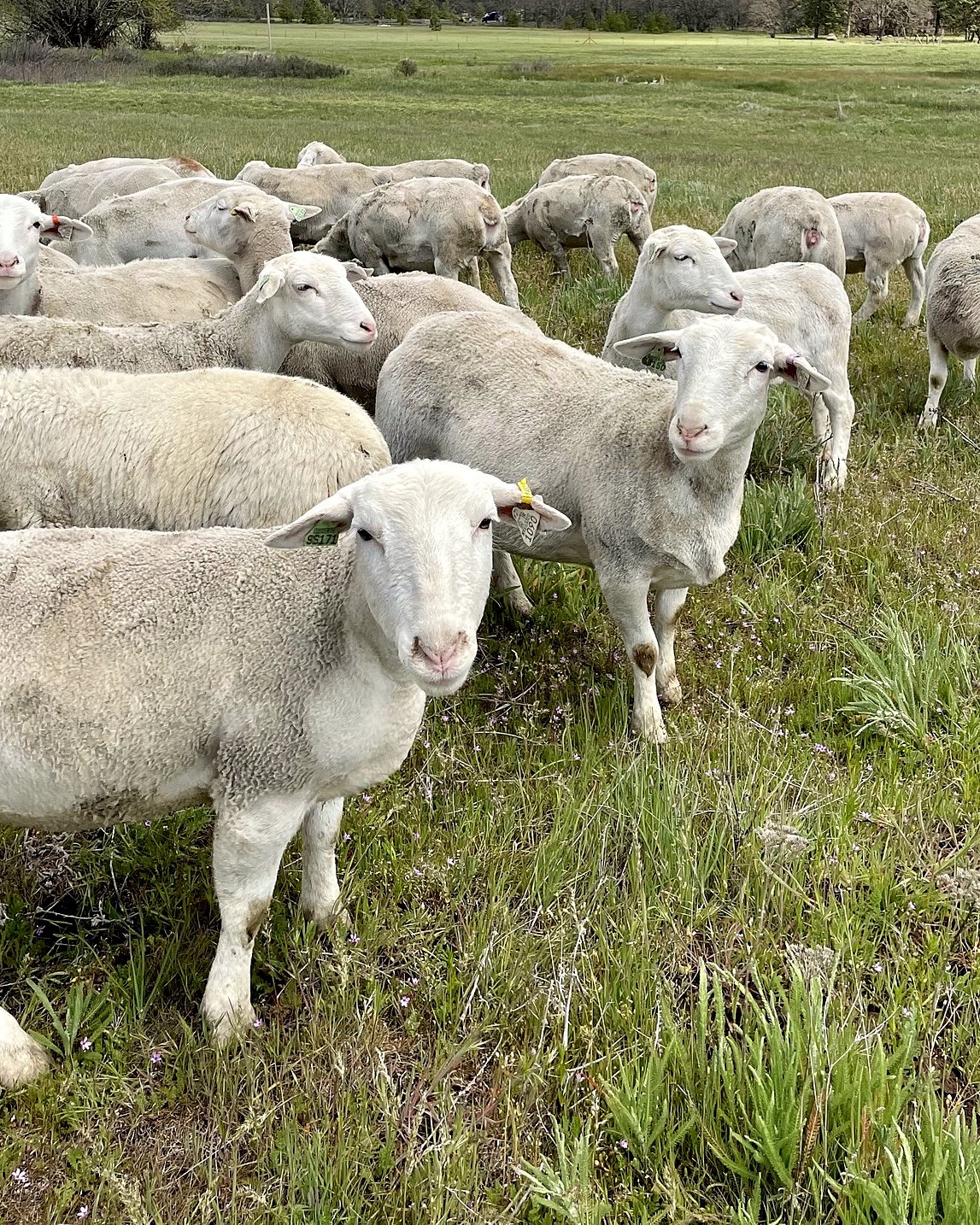
Young White Dorper ewes on spring pasture, two looking straight at the camera
Young ewes on spring pasture
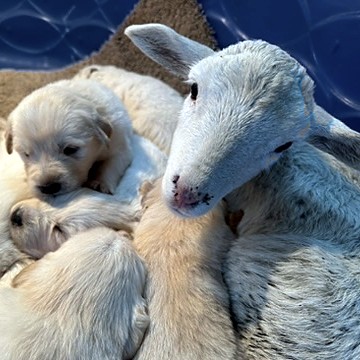
A White Dorper lamb resting among a litter of Great Pyrenees puppies
Raised together from the start
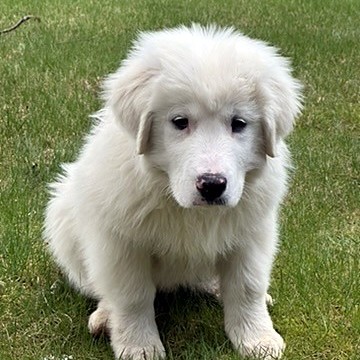
Fluffy white Great Pyrenees puppy sitting in green grass
One of our Great Pyrenees pups
Guardian Dogs · When Available

Great Pyrenees guardian puppies

Our breeding pair of Great Pyrenees guards the flock, and when they have a litter, we raise the puppies with the sheep.

These are working livestock guardians, and we place them with farms and ranches that need one. Starting a flock? Ask about a guardian puppy to go with it.

Litters are occasional, and we'll announce each one here once a breeding takes place. Email to join the waitlist and for details.

Order List

Reserve from our flock

Orders open each August, once we know how many lambs we'll have, for lambs ready in November. Send this form any time to get on our list. We'll email you when ordering opens to confirm your lamb, your cuts, and a deposit to hold it.

No payment is taken here.

About you
What you'd like
Your cut sheet

Pick how you'd like each part cut. For a half lamb, we cut one side of each. Your choices go to our USDA-inspected processor, and we'll let you know if anything needs adjusting. American names are in grey.

Shoulder

Neck

Best end rack

Loin

Chump sirloin

Leg

Shanks

Breast belly

Extras (optional)

Pickup or delivery

Deposit & cancellation policy

Reserving your lamb. When orders open each August, we'll confirm your order by email and ask for a deposit to hold it: $200 for a whole lamb, $100 for a half. Your deposit is credited toward your final bill. Posted prices are subject to change; your price is locked in when we confirm your order and receive your deposit.

Final payment. The balance for the lamb is due at pickup, based on the hanging weight. The processing fee is paid directly to the processor.

If plans change. Deposits are fully refundable until September 30. After that, we've scheduled processing on your behalf, so deposits are non-refundable, but you're welcome to pass your reservation to a friend.

If we come up short. If the season gives us fewer lambs than expected, orders are filled in the order deposits were received, and anyone we can't fill gets a full refund.

Simcoe Foothills Farm crest: a White Dorper ewe over the Columbia Gorge foothills of Washington Get in Touch

Reserve your lamb

Email Abraham to place an order, request wholesale pricing, or ask about the flock.

Location
Eastern Columbia Gorge, Washington
Biosecurity

Visiting the farm

To protect the health of our flock, we follow standard livestock biosecurity practices. Thank you for helping us keep our sheep healthy.

  • Visits are by appointment only.
  • If you've been around other sheep, goats, or livestock in the past 48 hours, please let us know before you come.
  • If you've visited farms outside the U.S., please wait at least 7 days before visiting.
  • Arrive in clean clothes and clean footwear, and use our boot wash station when you arrive and before you leave.
  • Park in the designated area, and stay with us while on the farm.
  • Please don't enter pens or touch the animals unless we invite you.
  • Leave your dogs at home. Our Great Pyrenees guardian dogs take the job seriously.
  • Wash or sanitize your hands before you leave.
  • If you're feeling sick, please reschedule.